Trenchless pipe repair fixes or replaces a buried sewer through access points instead of digging a trench along the entire line. Pipe lining creates a new wall inside the existing pipe. Pipe bursting breaks the old pipe apart while pulling a replacement through its route.
Often called no-dig sewer repair, these methods can reduce the work needed above the pipe. They still need access, and the condition of the line determines which method can solve the problem.
For help with a damaged sewer in Winston-Salem or the Triad, visit our trenchless sewer repair service page.
The inspection comes before the repair method
Recurring backups tell us there is a problem. They do not tell us whether the pipe needs lining, replacement or cleaning.
A sewer camera inspection helps us examine the line and identify visible damage or obstructions. We also need to establish the repair length, pipe size, connections and available access.
The camera cannot show a pipe wall hidden by heavy buildup or see beyond a blockage it cannot pass. Cleaning and further inspection may be needed before the repair scope is clear. Planning excavation or bursting also requires checking nearby utilities; a camera inside the sewer does not locate everything outside it.
How pipe lining creates a new pipe inside the old one
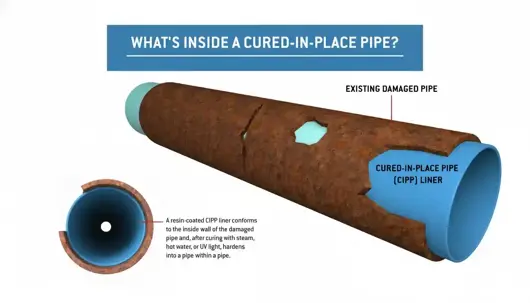
Pipe lining is also called cured-in-place pipe, or CIPP. A flexible liner containing resin goes inside the prepared sewer. Once it hardens, it forms a new inner pipe wall.
1. Clean and prepare the line
The crew removes the roots, scale or other material that interferes with the installation. Cast iron can need mechanical descaling to remove hard buildup.
Preparation allows the crew to check the remaining pipe and establish the space available for the liner.
2. Place the liner through an access point
The liner is prepared for the measured section and placed inside the existing pipe. An existing cleanout can provide access on some jobs. Others need an access opening.
The liner is expanded into position against the inside of the pipe.
3. Harden the liner
The resin cures using the process designed for that lining system. Systems differ, including those that use ultraviolet light or heat.
The result is a fitted inner pipe. Learn more about CIPP pipe lining and the services we provide.
4. Reopen connections and inspect the work
Drain connections covered by the liner need to be reopened. The crew checks the finished installation before returning the repaired line to normal service.
The repair scope should identify these connections so the work covers the functioning drain system, not only the straight length of pipe.
How pipe bursting replaces the existing line
Pipe bursting installs a replacement pipe along the old route. Equipment pulls a bursting head through the line, breaking or splitting the existing pipe and drawing the new pipe behind it.
This method needs space for equipment, access to the ends of the replacement section, and a plan for reconnecting the line. Pipe material, surrounding conditions and nearby utilities affect whether it is suitable.
Bursting and lining do different jobs. Lining rehabilitates the existing pipe from inside. Bursting replaces it. Neither should be selected solely because it avoids a continuous trench.
Where no-dig repair still needs access
“No-dig” describes the reduction in excavation along the pipe. It does not promise that every repair can happen without any opening in the ground or floor.
An existing cleanout may be usable. A damaged section may need to be exposed. Connections or equipment can require additional access.
Ask where the crew expects to enter the line, what surfaces will be disturbed and who restores those areas. That gives you a practical picture of the work at your property.
The condition of the pipe determines what lining can fix
Lining can address suitable cracked or worn pipe walls and leaking joints. It can be especially useful where removing the pipe would mean opening a finished floor or paved surface.
The shape and condition of the existing line still matter. A collapse that prevents installation or a serious alignment problem can require excavation and replacement in that area.
Can trenchless sewer repair fix a belly?
Pipe lining alone cannot fix a true sewer-line belly. A belly is a sag or low spot where water collects instead of continuing down the pipe. The liner follows the existing pipe’s shape, so it cannot lift that low section or restore its slope.
Waste can settle in the low spot and contribute to recurring clogs. The effect depends on the length and depth of the sag and how the line is functioning. A slow drain or repeated backup alone does not prove that a belly is the cause.
Confirm the sag before choosing a repair
A sewer camera inspection helps identify standing water, buildup and visible pipe damage. Standing water can also result from an obstruction farther along the line, and it can hide the pipe wall. Cleaning, another camera pass and locating the affected section may be needed to understand the problem and plan access.
Ask the contractor to explain what the footage shows, where the suspected sag begins and ends, and what supports the recommended repair. The goal is to distinguish a pipe-position problem from a blockage or damaged pipe wall.
Repairing the low section
Correcting a true belly generally means exposing the affected section, correcting its support and slope, and replacing or repositioning the pipe. Pipe bursting should not be assumed to correct the grade simply because it installs a new pipe along the old route.
Some projects combine a localized excavation with lining elsewhere. Our main drain replacement guide explains the access, estimate and preparation questions to ask when replacement is needed.
For a property in Winston-Salem, Greensboro or the surrounding Triad, share any existing inspection footage or repair estimate with us. We can evaluate the line and explain suitable sewer repair and replacement options before you choose a method.
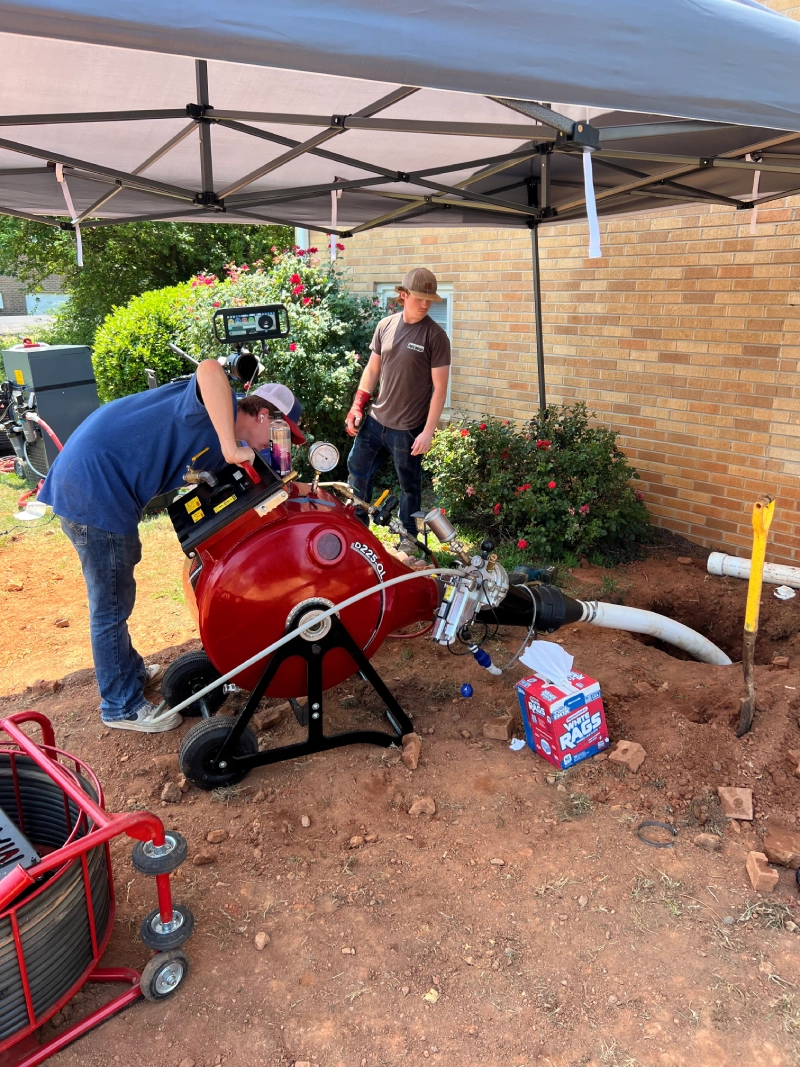
Pipe lining beneath a Kernersville basement
In one Kernersville home, a corroded cast iron sewer ran beneath a finished basement. We cleaned and lined approximately 30 feet of pipe in one day, keeping the basement slab intact.
The crew reopened the necessary branch connections after lining so the home’s drains could use the repaired line. This project shows the value of working from inside a suitable pipe when the surface above it is worth preserving.
See the Kernersville case study and repair photos.
What to ask about cost and time
Ask for the repair length, preparation, access, connections and completion checks to be included in the scope. Those details affect the work involved and the price.
Also confirm when you need to stop using connected drains and when normal use can resume. Avoiding a long excavation can reduce restoration work, but the repair schedule still depends on the pipe and installation.
For a detailed look at the alternatives, use our trenchless versus traditional repair comparison.
Questions about trenchless pipe repair
Can tree-root damage be lined?
Roots must be removed before lining. The remaining pipe’s condition and alignment determine whether a liner is suitable. Cleaning removes the roots; the repair must also address the damaged entry points within its scope.
Does the new liner make the pipe smaller?
The liner takes up some space inside the existing pipe. Cleaning removes buildup first, and the lining system must be appropriate for the pipe size and required flow. The contractor should account for the finished internal diameter.
Is pipe lining a temporary patch?
CIPP is intended to rehabilitate the pipe for long-term service. The installed system, preparation and workmanship affect the result. Review the written repair scope and applicable warranty rather than treating a general lifespan claim as a guarantee.
Can I use the plumbing while the line is being lined?
Connected fixtures may need to stay out of use during the work. Follow the crew’s instructions about which drains are affected and when they can be used again.
Find out whether your sewer can be repaired from inside
The Pipe Boss specializes in pipe lining and trenchless sewer repair. We serve Winston-Salem, Greensboro and the surrounding Triad communities.
Tell us about the problem and share any existing repair estimate or inspection footage. We can evaluate the line and explain the access and repair it needs.