Replacing your home’s main drain starts with finding which section has failed and what caused the problem. A blockage may need cleaning. A damaged pipe may need a section replaced, a new liner installed inside it, or a longer replacement.
That distinction matters most when the pipe runs beneath a finished floor, driveway or patio. The repair method determines how much of the surface above it needs to be opened and put back.
The usual sequence is to inspect the line, choose the repair, plan access, complete the work and check the finished pipe.
Need a professional diagnosis or quote? Visit our sewer line repair and replacement service page for camera-first evaluation and repair options in Winston-Salem and the Triad.
Find out which drain pipe needs work
The pipe beneath a sink is different from the main drain serving several fixtures. Inside or beneath the house, smaller drains join a larger line. The sewer lateral carries wastewater away from the building toward the public sewer or a septic system.
People often call all of this the “main line.” Before comparing estimates, ask the contractor to identify the exact section being repaired. A short, accessible pipe in a crawl space is a different job from a buried line beneath a concrete slab.
Ask where the work starts and ends, how much pipe is involved, and which fixtures connect to that section. Those details should be clear in the proposed scope.
Repeated backups deserve a closer look
A slow sink alone does not establish that the main drain needs replacing. Problems affecting several fixtures, or a backup that returns after clearing, give us more reason to investigate the shared line.
Useful details to tell us include:
- Which drains slow down or back up.
- Whether using one fixture affects another.
- How often the problem returns after cleaning.
- Any previous repairs or inspection footage.
Odors and wet spots can also be worth investigating, but they do not establish the cause on their own. A repair recommendation should connect the symptoms to findings in the pipe.
During an active wastewater backup, stop using the affected plumbing and call for help. Adding more water can make the backup worse.
A camera inspection helps separate a clog from a damaged pipe
We use a sewer camera inspection to examine the accessible line. It can show visible roots, buildup, cracks, corrosion and changes in alignment.
A blocked or water-filled section can limit the view. Cleaning may be needed before the camera can show the condition of the pipe wall.
The useful question is what the findings mean for the repair. Roots removed from a line can leave an entry point that needs attention. Scale removed from cast iron can reveal a pipe suitable for lining, or damage that needs a different approach. A clear drain and a repaired pipe are different outcomes.
The repair can involve cleaning, lining or replacement
Clearing an obstruction
Drain clearing removes material blocking the line. A pipe in sound condition may need no structural repair after the obstruction is removed.
Repeatedly clearing the same line without examining why it blocks can leave the underlying problem unresolved.
Repairing the pipe from inside
Cured-in-place pipe lining installs a resin-soaked liner inside an existing drain. The liner hardens into a new inner pipe wall, allowing a suitable damaged line to be repaired without removing it along its full length.
For cast iron, preparation can include removing scale before installing the liner. The pipe’s shape, condition and access determine whether this approach fits.
Our trenchless pipe repair guide explains how the process works.
A sagging section, often called a sewer-line belly, needs a different evaluation. Read why pipe lining cannot correct a sewer belly and what an inspection needs to establish.
Replacing the section that has failed
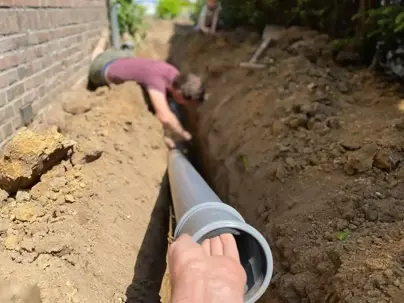
Replacement removes or replaces the damaged pipe itself. An accessible section can be reached directly. A buried section may need excavation, while some lines can be replaced using pipe bursting.
A serious sag, collapse or alignment problem can require opening the affected area so its position can be corrected. The repair plan should identify those sections rather than assuming every part of the line needs the same method.
A finished basement we kept intact in Kernersville
A Kernersville homeowner faced replacing a corroded cast iron sewer beneath a finished basement. Our inspection found that the roughly 30-foot line could be rehabilitated.
We removed the buildup, installed a cured-in-place liner and reopened the necessary drain connections. The work was completed in one day, with the basement slab intact.
See the Kernersville repair and project photos.
What affects the cost of main drain replacement?
The length of pipe is only part of the price. Access can make a large difference, especially beneath concrete or finished rooms.
A useful estimate identifies:
- The pipe section, length and proposed method.
- Cleaning and preparation.
- Access openings and connections.
- Required permits and inspections, including who handles them.
- The surface restoration included or excluded.
Compare the cost of the completed job. An estimate that ends when the pipe is installed may leave concrete, flooring or landscaping for you to arrange separately.
For a closer comparison of the methods, read our trenchless versus traditional sewer repair guide.
Preparing your home for the work
Ask which areas the crew needs to reach and clear stored items from those spaces. Confirm when connected toilets, sinks and appliances must stay out of use. Water service being available does not necessarily mean the drain being repaired can be used.
Also ask what will be checked before normal use resumes and whether any surface restoration happens on a separate schedule. This helps you plan around the whole project.
Questions about replacing a main drain
Can you line cast iron beneath a concrete floor?
Suitable cast iron lines can be cleaned and lined through access points. The inspection and preparation must establish that the line can accept the repair. A collapsed section or serious sag needs its own solution.
Does an old pipe automatically need full replacement?
Its condition matters more than age alone. Inspection findings help establish whether it needs cleaning, a targeted repair, lining or replacement.
Will the whole yard or floor need to be opened?
The amount of access depends on the repair. Lining can avoid opening the surface along the pipe, while excavation exposes the section that needs replacement. Ask the contractor to mark the planned access areas.
Have the main drain checked before choosing a replacement
The Pipe Boss helps homeowners in Winston-Salem, Greensboro and the Triad understand and repair damaged sewer lines. Tell us where the property is, what the drains are doing and whether you already have an estimate or camera footage.